Recipes
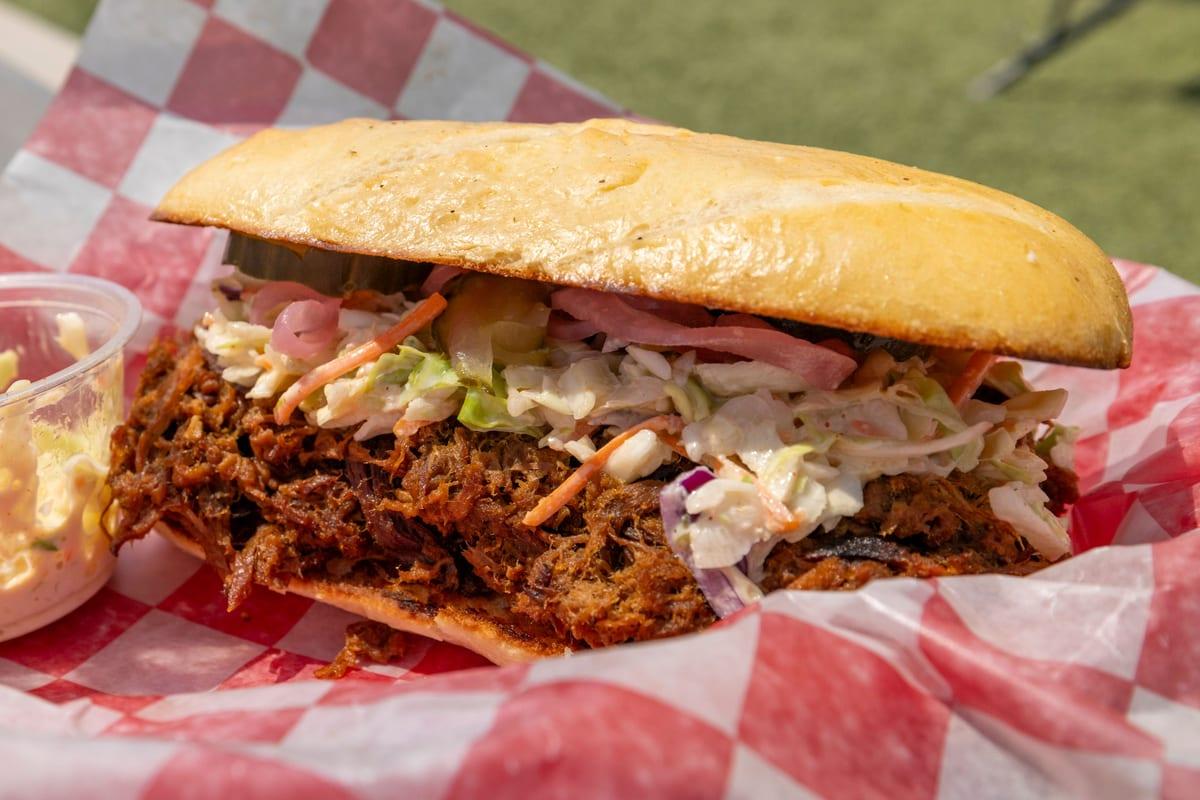
Pellet Grill Pulled Pork
The most forgiving long cook in barbecue. A pork butt has so much fat and connective tissue that it tolerates nearly everything short of being pulled early.
By Mike M. · Last updated November 13, 2026 · How we pick
Season an 8–10 lb bone-in pork shoulder, smoke at 225°F, wrap with apple juice when the bark sets around 165°F, raise to 250°F and finish at about 203°F when the blade bone wiggles free. Rest an hour, then pull.
The cut to start with
Pork butt — confusingly, the upper shoulder — is the most forgiving large cut you can buy. It is heavily marbled, full of collagen, and almost impossible to dry out. Where a brisket punishes a twenty-degree overshoot, a pork butt shrugs at it.
Buy it bone-in. The blade bone gives you the best doneness test in barbecue: when it twists free with light pressure, the meat is ready.
At a glance
- Prep time
- 20 minutes
- Cook time
- 8 to 12 hours for an 8 lb butt
- Smoker temp
- 225°F, raised to 250°F after wrapping
- Target internal temp
- 203°F internal, probe-tender
- Pellet flavor
- Apple, cherry or hickory
- Serves
- 10 to 12 servings
Plan for longer than you think
The rule of thumb is 1.5 to 2 hours per pound at 225°F, but pork butts stall just like brisket. A finished butt holds beautifully in a cooler for hours, so start early. Running late is the only version of this cook that causes real problems.
Pellet Grill Pulled Pork
Ingredients
- 1 bone-in pork shoulder (Boston butt), 8 to 10 lb
- 2 tbsp yellow mustard, as a binder
- 1/2 cup barbecue rub
- 1 cup apple juice or cider, for the wrap
- Buns and coleslaw, to serve
Method
1Trim lightly and season
Trim the fat cap to about a quarter inch and leave the rest — pork butt has plenty of internal fat and does not need trimming the way a brisket does. Mustard, then rub, on every surface.
2Smoke fat side up at 225°F
Straight on the grate, fat cap up, at 225°F. Expect 1.5 to 2 hours per pound overall, though pork butt is far less temperamental about this than brisket.
3Wrap at about 165°F
When the bark is deep mahogany and firm, usually around 165°F, wrap tightly in foil or butcher paper with the apple juice. Raise the grill to 250°F.
4Cook to 203°F
Finish until the center reads about 203°F and a probe slides in freely. The blade bone should wiggle loose with light pressure — that is the traditional test and it is a good one.
5Rest for an hour
Rest, still wrapped, for at least an hour in a dry cooler. Pulling straight off the grill wastes the juices and scalds your hands.
6Pull and dress
Pull out the blade bone, then shred with forks or gloved hands. Mix the bark pieces back through so every portion gets some, and add a little of the wrap juice back in rather than sauce.
| Shoulder weight | Approximate time | Cook to |
|---|---|---|
| 4-6 lb | 7 - 9 hr | 203°F, probe-tender |
| 6-8 lb | 9 - 11 hr | 203°F, probe-tender |
| 8-10 lb | 10 - 13 hr | 203°F, probe-tender |
Times are a planning guide, not a timer. Every cut stalls differently, so cook to internal temperature and treat the clock as a rough estimate.
Gear for this cook
- Pellets: best pellets for pork
- Thermometer: the thermometers worth owning — an instant-read is the one tool this cook genuinely needs.
- Grill: our full pellet grill ranking
A 10-hour cook needs hopper capacity more than grate space. Check the hopper will run overnight without a refill — our rankings list capacity for every model.
#ad Those pages carry affiliate links and live prices — how this site is funded.
Cook this next
The other pork classic, in six hours instead of ten.
Beef's equivalent, and just as forgiving.
Once this feels easy, this is the next step up.
Questions people actually ask
How long does pulled pork take on a pellet grill?
Roughly 1.5 to 2 hours per pound at 225°F — about 10 to 13 hours for an 8–10 lb bone-in shoulder, plus an hour of rest. Cook to about 203°F and probe-tender.
What temperature is pulled pork done at?
About 203°F. The blade bone should twist out cleanly. USDA’s safety minimum for pork is 145°F, which the shoulder passes many hours earlier — the higher number is purely about being able to shred it.
Should you wrap pork butt?
It helps. Wrapping at around 165°F pushes it through the stall and shortens the cook by a couple of hours. Unwrapped gives a firmer bark if you have the time.
Sources
Read next
Recipes
Pellet Grill Ribs: the 3-2-1 Method
3 hours smoke, 2 wrapped, 1 glazed. All at 225°F.
Recipes
Smoked Chuck Roast
250°F, wrap at 165°F, cook to 203°F. Brisket texture, less risk.
Recipes
Pellet Grill Brisket
225°F, wrap at 165°F, 203°F probe-tender, rest 2 hours.
Wood Pellets
The Best Wood Pellets for Pork
Pork takes fruitwood best — and the cut changes the answer.