Guides
How to Store Wood Pellets
Pellets have no binder — the wood's own lignin holds them together. Add moisture and they fall apart, and the dust jams your auger.
By Mike M. · Last updated November 6, 2026 · How we pick
How should I store wood pellets?
In a sealed container, off a concrete floor, out of the weather, and never long-term in the grill’s hopper. Pellets are compressed sawdust with no binder — they absorb atmospheric moisture, swell, and crumble into fines, and fines jam augers.
Why pellets are so vulnerable
A wood pellet is sawdust compressed hard enough that the wood’s own lignin melts slightly and glues it together. No additives, no binder — which is exactly what makes them food-safe and exactly what makes them fragile.
Add water and the lignin bond releases. The pellet swells, splits lengthways and crumbles. What you are left with is damp sawdust, which does not burn at a predictable rate and does jam an auger.
The four rules
- Sealed container, always. An open bag folded over in a garage is not storage. A humid garage will soften a bag in weeks.
- Off the concrete. Concrete wicks moisture from the ground continuously. A pallet, a shelf or two battens is enough to break the contact.
- Never store long-term in the hopper. The hopper is outdoors, vented, and has a lid seam that rain finds. Most current grills have a cleanout specifically so you can empty it.
- One container per flavor, labeled. Mixing by accident is not harmful but you lose track of what you are burning.
How to tell if pellets are ruined
| Test | Good pellets | Ruined pellets |
|---|---|---|
| Snap one | Breaks cleanly with a crack | Bends, crumbles or feels soft |
| Look at the bag bottom | A little dust is normal | A layer of sawdust |
| Look at the pellets | Smooth, uniform, tight | Swollen, split lengthways, fuzzy |
If they fail, bin them. Using damp pellets is a false economy: you risk a failed cook and an auger jam, and the auger is the part you least want to deal with.
Which container
Two approaches, depending on bag size:
- A sealed bin holding a 20 lb bag. Cheap, small, stackable. You scoop from the top, which means it is easy to leave a layer at the bottom for a year.
- A 40 lb bottom-draw dispenser. Takes a whole bulk bag and dispenses from the bottom, so the oldest pellets get used first. Needs real floor space.
If you buy 40 lb bags — which is the biggest saving available in pellet grilling — the dispenser is the right call. Bulk buying only saves money if the pellets stay dry. See pellet storage containers.
The scoop detail
A plain scoop carries dust and fines straight into your hopper, where they head for the auger. A scoop with sifter holes in the base drops them out first.
It costs very little and it addresses the precise failure mode this page is about. It is the kind of small, unglamorous thing that prevents a real problem.
End-of-season storage
- 1
Empty the hopper via the cleanout
Do not leave pellets in an outdoor hopper over a winter. This is the single most important step.
- 2
Check what comes out
If there are fines and dust at the bottom, sift them out before storing the rest. If the pellets themselves fail the snap test, bin the lot.
- 3
Run the grill briefly to clear the auger tube
A short burn clears pellets out of the auger tube so nothing sits in there absorbing moisture over the off-season.
- 4
Store the pellets sealed, indoors if possible
A garage shelf is fine. A garage floor is not. A shed with a leaking roof is worst.
- 5
Cover the grill
Or better, bring it under shelter. See grill covers.
The picks in full
#1 · Anyone buying 40 lb bags
40 lb Pellet Storage Dispenser
Ben & Jane
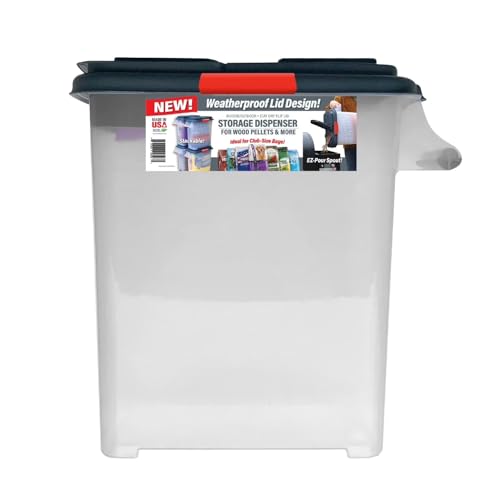
Takes a whole 40 lb bag and dispenses from the bottom, so the oldest pellets get used first.
- 40 lb capacity
- BPA-free, food safe
- Made in USA
- Bottom dispensing
Price as of November 7, 2026. #ad how this is funded
Good
- One container per bulk bag
- Bottom draw means stock rotates itself
Trade-off
- Takes real floor space
- Costs more than two simple bins
#2 · Keeping an opened bag dry
Pellet Storage Bin with Lid (22 lb)
RCK Sales
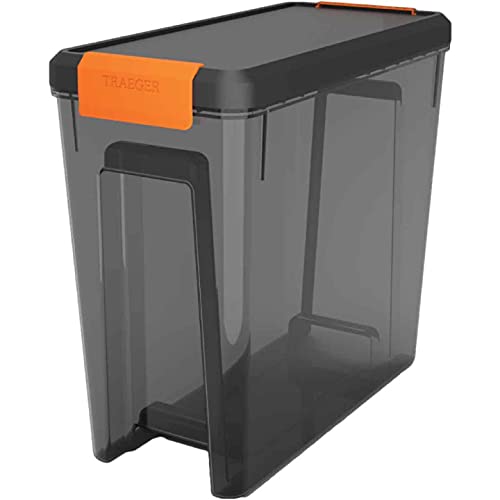
Pellets that absorb moisture crumble and jam augers. A sealed bin is the fix, and it is cheap.
- Holds 22 lb
- Plastic bin with lid
- Sized to the Traeger BAC615 pattern
Price as of November 7, 2026. #ad how this is funded
Good
- Holds a full 20 lb bag with the lid closed
- Stops the single most common cause of auger jams
Trade-off
- 22 lb means a second bin if you buy 40 lb bags
#3 · Filling a hopper without the dust
Wood Pellet Scoop with Sifter Holes
Generic
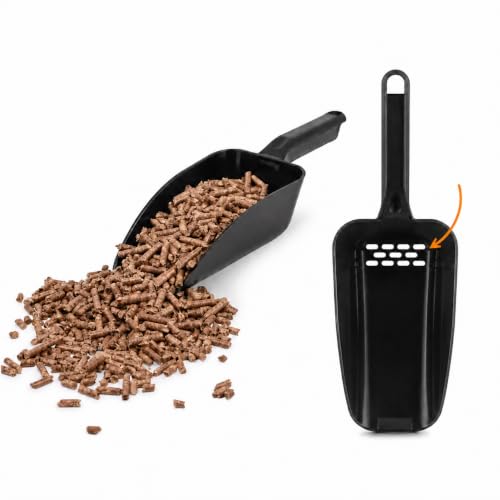
The sifter holes drop sawdust out before it reaches your auger — the detail a plain scoop misses.
- 12.8 in
- Sifter holes in the base
- For smoker hoppers
Price as of November 7, 2026. #ad how this is funded
Good
- Keeps fines out of the auger, which is where jams start
- Cheap
Trade-off
- One more thing to store
Questions people actually ask
How should wood pellets be stored?
Sealed, off a concrete floor, out of the weather. Concrete wicks ground moisture, and pellets absorb atmospheric humidity readily because they have no binder holding them together.
Can I leave pellets in my grill hopper?
For a day or two between cooks, yes. Not long-term — the hopper is outdoors and vented, and most current grills have a cleanout specifically so you can empty it.
Do wood pellets go bad?
They do not spoil, but they degrade physically. Moisture makes them swell and crumble into fines, and fines jam augers. Kept sealed and dry they last indefinitely.
How do I know if pellets are too old to use?
Snap one. A good pellet breaks cleanly; a damp one bends or crumbles. A layer of sawdust at the bottom of the bag means the same thing.
Can I dry out damp pellets?
Not usefully. Once the lignin bond has released and the pellet has swollen or split, drying it does not restore its structure. Bin them rather than risk the auger.
Sources
Read next
Covers & Accessories
The Best Pellet Storage Containers
Prevents the most common first-year pellet grill failure.
Wood Pellets
The Best Budget Wood Pellets
Cheapest pellets worth burning, ranked by cost per pound.
Guides
Common Pellet Grill Problems and Fixes
Nine problems and their real causes — mostly maintenance, not faults.
Guides
How Long Do Pellet Grills Last?
5-10 years covered; far less uncovered. The parts that fail.