Guides
What Does a Pellet Grill Cost Per Cook?
The arithmetic is simple and nobody prints it. One decision — bag size — makes a bigger difference to your fuel bill than anything else you do.
By Mike M. · Last updated November 6, 2026 · How we pick
The consumption figures
A pellet grill burns roughly 1 to 1.5 lb of pellets an hour at smoking temperatures (180-250°F) and 2 to 3 lb an hour at grilling temperatures (350-500°F). Cold weather, wind and a larger chamber all push those figures up — by as much as 50% in genuinely cold conditions.
Those rates are the widely reported working figures for pellet grills and they match the hopper run-time claims manufacturers make (Z Grills rates a 28 lb hopper at “up to 28 hours”, which is 1 lb an hour at low temperature). We have not metered consumption ourselves. Treat them as a planning guide and expect your own grill to vary.
Pellets per cook
| Cook | Temperature | Time | Pellets used |
|---|---|---|---|
| Burgers for the family | 400°F | 30 min | ~1.25 lb |
| Whole chicken | 375°F | 90 min | ~3-4 lb |
| Baby back ribs | 250°F | 5 hours | ~6-8 lb |
| Pork shoulder | 250°F | 10 hours | ~12-15 lb |
| Brisket | 250°F | 12 hours | ~15 lb (20 lb in cold weather) |
| Jerky (vertical cabinet) | 160°F | 5 hours | ~4-5 lb |
Two things jump out. A brisket is roughly one 18 lb bag of Traeger pellets. And a weeknight burger cook uses barely a pound, which is why the running cost of a pellet grill is much lower than people expect for everyday use.
The one change that matters: bag size
This is the whole page in one section. Pellets are sold in 18 lb, 20 lb and 40 lb bags, and the cost per pound differs enormously.
| Bag | Weight | Relative cost per pound |
|---|---|---|
| Pit Boss Competition Blend | 40 lb | Lowest we track |
| CookinPellets Hickory + Perfect Mix | 2 x 40 lb (80 lb) | Very low, highest up-front cost |
| Camp Chef Competition Blend | 20 lb | Moderate |
| Bear Mountain Gourmet Blend | 20 lb | Moderate |
| Kingsford Craftsmoke | 20 lb | Low sticker, moderate per pound |
| Traeger Signature Blend | 18 lb | Highest we track |
Switching from 18 lb premium bags to 40 lb bulk bags roughly halves your cost per pound for identical food. Over a season of weekly cooking that is real money, and it is the single easiest saving available in this hobby.
The constraint is storage, not price — bulk buying only saves money if the pellets stay dry. A 40 lb dispenser pays for itself quickly, and how to store wood pellets covers the rest.
The four things that increase consumption
- Cold weather. The biggest factor. A thin-bodied grill loses heat to the air and the controller feeds more pellets to compensate. Below about 40°F, expect up to 50% more.
- Wind. Strips heat off the body faster than still cold air does. Shelter the grill if you can.
- A larger chamber. More volume and more surface area to heat, on every cook including the small ones. This is the running-cost argument for not buying too big.
- Opening the lid. Every lid-open dumps the chamber’s heat and the grill rebuilds it with pellets. Use a leave-in probe.
What else a year of ownership costs
| Item | Frequency | Note |
|---|---|---|
| Pellets | Ongoing | The main consumable. Bag size is the lever |
| Grease liners | Every 2-3 cooks | Trivial cost, large convenience |
| A cover | Once, replaced every few years | Prevents the expensive failures |
| Igniter | Every few years | A genuine consumable; inexpensive |
| Electricity | Ongoing | Negligible — see electricity cost |
Nothing there is large. A pellet grill is cheap to own; the up-front cost is the cost.
The honest comparison with gas
Pellets cost more per pound than propane does per equivalent BTU. But a pellet grill at 225°F draws very little fuel, and a gas grill at searing heat draws a lot. For low-and-slow the pellet grill is competitive; for high-heat grilling gas is cheaper.
In practice, for most households the fuel difference is small enough not to drive the decision. Flavor and convenience should. See pellet vs gas.
The picks in full
#1 · High-volume cooking on a budget
Pit Boss Competition Blend
Pit Boss
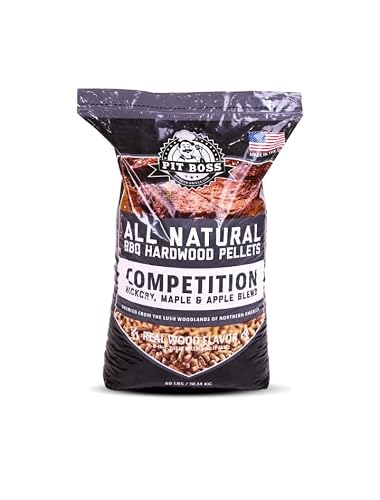
40 lb for roughly what a premium 20 lb bag costs. The best cost per cook on this site.
- 100% natural hardwood, no added scents, sprays or glues
- 40 lb bag
- Pit Boss rates it for beef, chicken, pork and vegetables
- Bag dimensions 26 x 5 x 18 in
Price as of November 7, 2026. #ad how this is funded
Good
- Lowest cost per pound we track
- Fits any pellet grill
- Clean burn, no additives
Trade-off
- 40 lb is heavy to lift into a hopper
- Pit Boss does not publish the wood ratios in the blend
#2 · Serious volume and purists
CookinPellets Hickory + Perfect Mix (2 x 40 lb)
CookinPellets
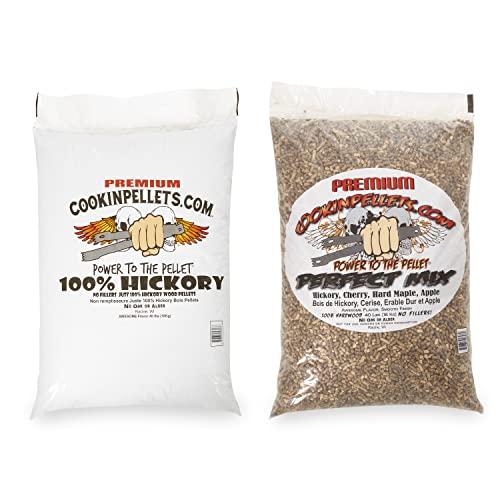
80 lb in one order with no bark and no filler wood. The enthusiast's bulk buy.
- Hickory, cherry, hard maple and apple
- Two 40 lb bags
- No bark, no filler woods, no additives
Price as of November 7, 2026. #ad how this is funded
Good
- No-filler policy is rare and genuinely affects flavor
- 80 lb lasts most households a season
Trade-off
- Highest up-front cost on this page
- Needs real dry storage space
#3 · All-round use with minimal ash
Camp Chef Competition Blend
Camp Chef
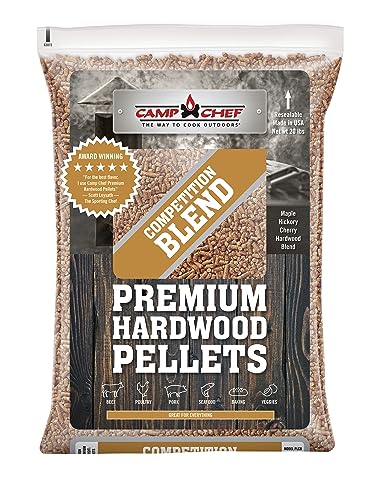
Kiln-dried maple, hickory and cherry at an everyday price. Low ash because the moisture is low.
- Maple, hickory and cherry blend
- 20 lb bag
- 100% virgin hardwoods, no oils, chemicals or binders
- Kiln-dried for low moisture; made in the USA
Price as of November 7, 2026. #ad how this is funded
Good
- Kiln-drying means fewer pellets burned to hold temperature
- Safe in all pellet grills
Trade-off
- Nothing distinctive about the flavor versus other maple-hickory-cherry blends
#4 · Anyone buying 40 lb bags
40 lb Pellet Storage Dispenser
Ben & Jane
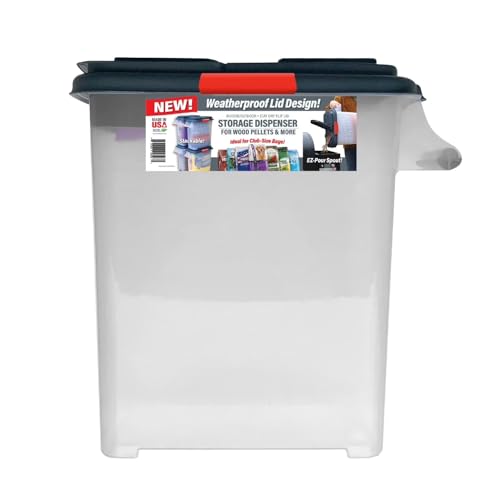
Takes a whole 40 lb bag and dispenses from the bottom, so the oldest pellets get used first.
- 40 lb capacity
- BPA-free, food safe
- Made in USA
- Bottom dispensing
Price as of November 7, 2026. #ad how this is funded
Good
- One container per bulk bag
- Bottom draw means stock rotates itself
Trade-off
- Takes real floor space
- Costs more than two simple bins
Questions people actually ask
How much does it cost to run a pellet grill per cook?
It depends on bag size more than anything else. A brisket uses about 15 lb of pellets; buying 40 lb bags rather than 18 lb bags roughly halves what those 15 lb cost you. Electricity is negligible.
How many pellets per hour does a pellet grill use?
Roughly 1 to 1.5 lb an hour at smoking temperatures and 2 to 3 lb an hour grilling hot, with cold weather and wind pushing both figures up substantially.
How many pellets does a brisket use?
About 15 lb over twelve hours at 250°F, up to 20 lb in cold or windy conditions — roughly one 18 lb bag of Traeger pellets.
Are pellet grills cheaper to run than gas?
For low-and-slow cooking they are competitive, because a pellet grill at 225°F uses very little fuel. For high-heat grilling gas is cheaper. The difference is usually too small to drive the decision.
Does a bigger pellet grill cost more to run?
Yes, on every cook. More chamber volume and surface area mean a longer warm-up and more pellets to hold temperature — including when you are only cooking for two.
Sources
Read next
Guides
How Many Watts Does a Pellet Grill Use?
Far less than you think — and the ignition is the only real draw.
Wood Pellets
The Best Budget Wood Pellets
Cheapest pellets worth burning, ranked by cost per pound.
Guides
What Size Pellet Grill Do I Need?
100 sq in per person — and why buying too big costs you weekly.
Covers & Accessories
The Best Pellet Storage Containers
Prevents the most common first-year pellet grill failure.