Guides
Common Pellet Grill Problems and Fixes
Most pellet grill 'faults' are one of three things: ash, damp pellets, or water. Here is how to tell which you have.
By Mike M. · Last updated November 6, 2026 · How we pick
Start here: three causes explain almost everything
Ash in the burn pot causes temperature swings. Damp pellets cause auger jams and failed ignitions. Water in the controller housing causes erratic readings and dead displays. Before suspecting a faulty part, check those three — they account for the large majority of pellet grill complaints.
The problem table
| Symptom | Most likely cause | Fix |
|---|---|---|
| Temperature swings up and down | Ash restricting airflow in the burn pot | Let it go fully cold, vacuum the burn pot |
| Will not ignite | Unprimed or jammed auger, or a worn igniter | Check the auger turns and pellets drop; then suspect the igniter |
| Auger jammed or grinding | Damp pellets crumbled into fines | Empty the hopper via the cleanout, bin the pellets, clear the auger tube |
| Cannot hold temperature in cold weather | Heat loss through a thin body | Normal. Expect higher pellet use; a thermal blanket helps below 40°F |
| Big flare-up on ignition | Unburned pellets left in the burn pot | Always let the cool-down cycle finish; clear the pot before relighting |
| Food tastes bitter or acrid | Old grease in the tray, or carbon flakes from the lid | Empty the tray; scrape only flaking carbon off the lid |
| Not enough smoke flavor | Cooking too hot — pellet smoke drops above ~250°F | Cook at 225°F, or add a smoke tube |
| Erratic temperature readings | Loose probe connector, or water in the controller housing | Reseat the probe wiring; dry and cover the controller |
| One side cooks faster than the other | Normal. The chimney end runs hotter on most barrels | Map it with two probes and rotate food |
Which side of a pellet grill is hotter?
On most barrel grills, the end nearest the chimney runs hotter, because that is the direction airflow travels. On some designs the hopper end runs hotter because the burn pot sits there.
Either way it is normal, not a fault, and the useful thing is to know your own grill. Put a probe at each end of the grate, run it at 250°F for twenty minutes, and note the difference. It is a five-minute exercise that explains a lot of mysteriously uneven cooks, and then you simply put the thicker end of the brisket on the hotter side.
What are common pellet grill problems during long cooks?
Four things go wrong on long cooks specifically, and all four are preventable:
1. Running out of pellets
The obvious one and the most common. At roughly 1.25 lb an hour at smoking temperatures, an 18 lb hopper is about fourteen hours and a 5 lb hopper is about four. Know your number before you start. See what happens when a pellet grill runs out.
2. Ash accumulation mid-cook
A twelve-hour cook generates enough ash to start restricting airflow before it ends, which is why temperature wander often appears in the last third of a long cook rather than at the start. Start every long cook with a clean burn pot.
3. Grease accumulation
A pork shoulder or brisket renders a lot of fat. A tray that was fine at the start can be full by hour eight. Check it before a long cook, not after.
4. Weather change
Overnight temperature drops and wind both increase pellet consumption significantly on a thin-bodied grill. A cook that would take 15 lb in the afternoon can take 20 lb overnight in November.
The fixes that prevent most of this
- A clean burn pot before any long cook. Five minutes with an ash vacuum.
- Dry pellets in a sealed container. See how to store wood pellets.
- A cover on the grill when it is not in use. Water in the controller is the one failure that costs real money.
- Let the cool-down cycle finish, every time. It clears the burn pot for the next ignition.
- Two probes, mapped once. Know your hot spot.
When it genuinely is a part
Three components do fail, and all three are inexpensive and replaceable on every brand we cover:
- The igniter. Effectively a consumable — every ignition wears it. Symptom: will not light even with a primed auger and a clean pot.
- The auger motor. Symptom: no pellets reach the pot and the motor does not turn or grinds. Often a consequence of a jam rather than the original cause.
- The induction fan. Symptom: weak or no airflow, fire struggling to establish, often audible as a change in noise.
All three are in-warranty items on a grill under three to five years old. See warranty comparison.
We have not disassembled these grills or performed repairs on them. The diagnostic logic above follows from how the components work and from what the manufacturers’ own documentation describes. For anything involving the controller or mains wiring, contact the manufacturer rather than taking the panel off — these are mains-powered appliances.
The picks in full
#1 · Cleaning a pellet grill properly and safely
PowerSmith PAVC101 Ash Vacuum
PowerSmith
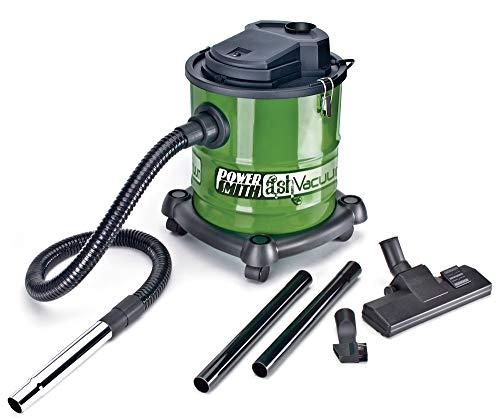
A purpose-built ash vacuum. Using a shop vac on grill ash is how shop vacs catch fire.
- 10 amp motor
- Canister ash vacuum
- Designed for fireplace and grill ash
Price as of November 7, 2026. #ad how this is funded
Good
- Rated for fine ash, which clogs and ignites in ordinary vacuums
- Turns a 20-minute clean into five
Trade-off
- Bulky to store
- Overkill if you only cook a few times a year
#2 · Keeping an opened bag dry
Pellet Storage Bin with Lid (22 lb)
RCK Sales
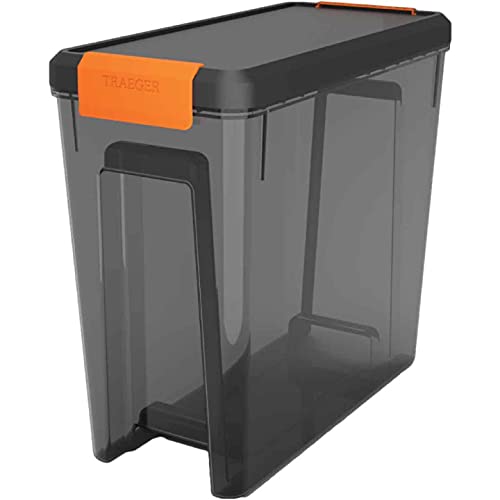
Pellets that absorb moisture crumble and jam augers. A sealed bin is the fix, and it is cheap.
- Holds 22 lb
- Plastic bin with lid
- Sized to the Traeger BAC615 pattern
Price as of November 7, 2026. #ad how this is funded
Good
- Holds a full 20 lb bag with the lid closed
- Stops the single most common cause of auger jams
Trade-off
- 22 lb means a second bin if you buy 40 lb bags
#3 · Monitoring several cuts at once on a budget
TempPro TempSync 1000ft Wireless
TempPro
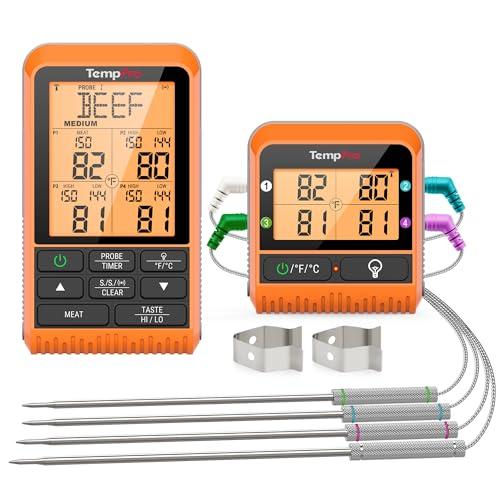
Four color-coded probes and 1,000ft of RF range for about a third of a Thermapen. The value pick.
- 4 color-coded probes
- 1,000ft RF range
- Alarms and a backlit display
$59.9917% off
Price as of November 7, 2026. #ad how this is funded
Good
- Four probes means a whole rack of ribs plus the pit temperature
- RF range beats Bluetooth across a house
Trade-off
- RF base station is another thing to keep charged
- Not as accurate as a Thermapen
#4 · Filling a hopper without the dust
Wood Pellet Scoop with Sifter Holes
Generic
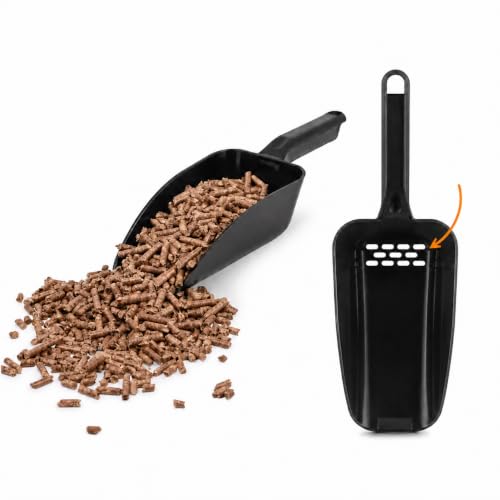
The sifter holes drop sawdust out before it reaches your auger — the detail a plain scoop misses.
- 12.8 in
- Sifter holes in the base
- For smoker hoppers
Price as of November 7, 2026. #ad how this is funded
Good
- Keeps fines out of the auger, which is where jams start
- Cheap
Trade-off
- One more thing to store
Questions people actually ask
What are common pellet grill problems during long cooks?
Running out of pellets, ash restricting airflow in the last third of the cook, a grease tray filling up, and weather changes raising consumption. All four are preventable with a clean pot, a known hopper figure and a check before you start.
Which side of a pellet grill is hotter?
Usually the chimney end, because that is the direction airflow travels — though on some designs the burn-pot end is hotter. It is normal. Map your own grill with two probes and put thicker cuts on the hot side.
Why does my pellet grill temperature keep swinging?
Ash in the burn pot restricting the airflow combustion needs, nine times out of ten. Let it go fully cold and vacuum the pot before suspecting the controller.
Why will my pellet grill not light?
Check in this order: are pellets reaching the burn pot (auger primed and turning), is the pot clear of old unburned pellets and ash, and only then suspect the igniter. The igniter is a consumable and the most commonly replaced part.
Why does my food taste bitter?
Old grease in the drip tray, or carbon flakes falling from the lid. Empty the tray and scrape off anything flaking — but leave the thin seasoned carbon layer alone.
Sources
Read next
Guides
Why Is My Pellet Grill Losing Heat?
Six causes in diagnostic order. The first explains most cases.
Guides
What Happens If Your Pellet Grill Runs Out of Pellets?
The fire goes out. Here's the recovery, step by step.
Guides
How to Clean a Pellet Grill
Five steps, with how often — and why it fixes temperature problems.
Guides
How to Store Wood Pellets
Why damp pellets jam augers, and how to prevent it.