Wood Pellets
The Best Wood Pellets for Ribs
Ribs are the cook where appearance matters as much as taste, which makes cherry the wood most people are missing.
By Mike M. · Last updated November 6, 2026 · How we pick
What ribs need
Baby backs run about five hours and spare ribs about six, which is short enough to take a stronger wood than brisket and long enough that color develops. Cherry blended with hickory is the competition standard: hickory for flavor depth, cherry for the deep mahogany bark.
Cherry is the wood people overlook
Bear Mountain describes cherry as giving a rich, fruity-smoky flavor, and it does. But the reason competition cooks reach for it is visual: cherry produces a deeper, redder color on pork than any other common wood.
If your ribs taste right but come off pale, that is a wood problem rather than a technique problem, and cherry is the answer. Run it at roughly half the hopper alongside hickory and you get both.
The wood table for ribs
| Wood | Verdict for ribs | Note |
|---|---|---|
| Cherry | Excellent | Best color of any wood; mild enough to run alone |
| Hickory + cherry blend | Excellent | The competition standard — depth plus color |
| Competition blend | Excellent | Maple-hickory-cherry does the same job in one bag |
| Apple | Very good | Mild and sweet; a touch light on spares |
| Pecan | Very good | Nutty, forgiving, suits pork well |
| Hickory alone | Good | Strong but fine over five hours; pale color |
| Mesquite | Avoid | Too strong for pork, and the wrong flavor profile |
How much you need
A five-hour rib cook at 250°F uses roughly 6 to 8 lb of pellets. That means even a small hopper manages it — a 5 lb hopper will need one top-up, an 8 lb hopper just about makes it, and anything above 13 lb is comfortable.
Ribs are therefore the long cook that is actually accessible on a cheap grill, which is one reason we recommend them as the second thing a new owner should cook. See best grills for beginners.
Temperature and smoke
250°F is the standard rib temperature and it is a reasonable compromise between smoke and time. At 225°F you get noticeably more smoke and add about an hour; at 275°F you save an hour and lose some.
If you wrap (the Texas crutch), the meat stops taking smoke the moment it is wrapped — so everything the wood is going to do happens in the first two to three hours. That is also the window where a smoke tube earns its keep.
The picks in full
#1 · Color on ribs and pork
Bear Mountain Cherry (2-pack)
Bear Mountain
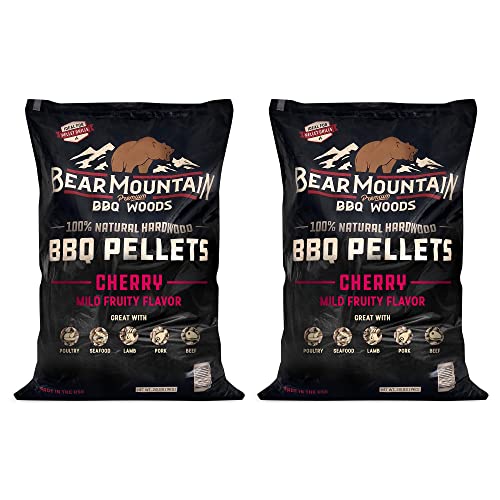
Fruity smoke and the best color of any wood here. Mix it with hickory for competition-style bark.
- 100% cherry hardwood
- Two 20 lb bags
- Low moisture, minimal ash
- Works in all pellet grills
Good
- Deep mahogany color on pork and poultry
- Mild enough to run on its own
Trade-off
- Not enough backbone for beef on its own
#2 · Cooks who want to know exactly what is burning
Lumber Jack Competition Blend
Lumber Jack
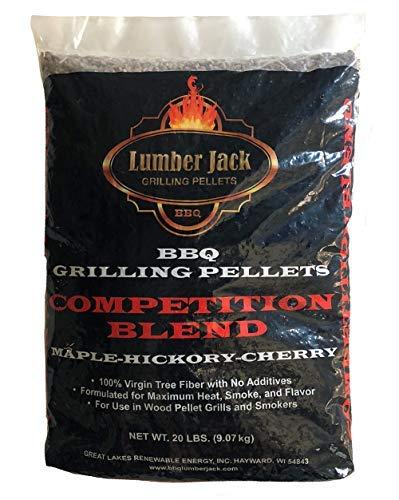
The only bag here that publishes its exact ratio: one third each maple, hickory and cherry.
- 1/3 maple, 1/3 hickory, 1/3 cherry — stated on the bag
- 20 lb bag
- Made in the USA
- Rated for pellet grills, tube smokers and the Smokin Wedgie
Good
- Published wood ratio, which almost no brand gives you
- Balanced flavor that suits most cuts
Trade-off
- 20 lb bag costs close to a Pit Boss 40 lb
#3 · Buying hickory in bulk without the 40 lb lift
Bear Mountain Hickory (2-pack)
Bear Mountain
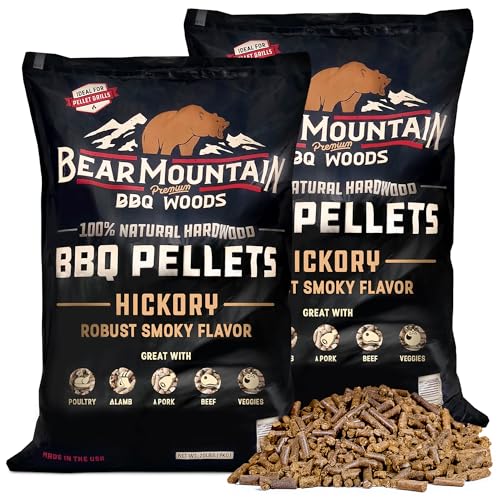
40 lb of pure hickory in two manageable bags instead of one back-breaking sack.
- 100% hickory hardwood
- Two 20 lb bags
- Bag measures 14 x 4 x 20 in
- Low moisture, low ash
Price as of November 7, 2026. #ad how this is funded
Good
- Two bags are easier to store and lift than one 40 lb
- Pure hickory, not a blend
Trade-off
- Costs more per pound than a Pit Boss 40 lb bag
#4 · All-round use with minimal ash
Camp Chef Competition Blend
Camp Chef
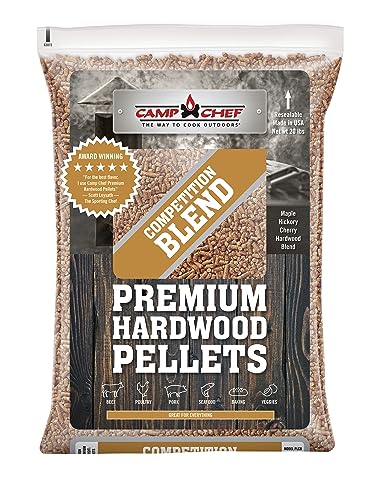
Kiln-dried maple, hickory and cherry at an everyday price. Low ash because the moisture is low.
- Maple, hickory and cherry blend
- 20 lb bag
- 100% virgin hardwoods, no oils, chemicals or binders
- Kiln-dried for low moisture; made in the USA
Price as of November 7, 2026. #ad how this is funded
Good
- Kiln-drying means fewer pellets burned to hold temperature
- Safe in all pellet grills
Trade-off
- Nothing distinctive about the flavor versus other maple-hickory-cherry blends
#5 · Poultry, vegetables, anything you would hickory but softer
Bear Mountain Pecan (2-pack)
Bear Mountain
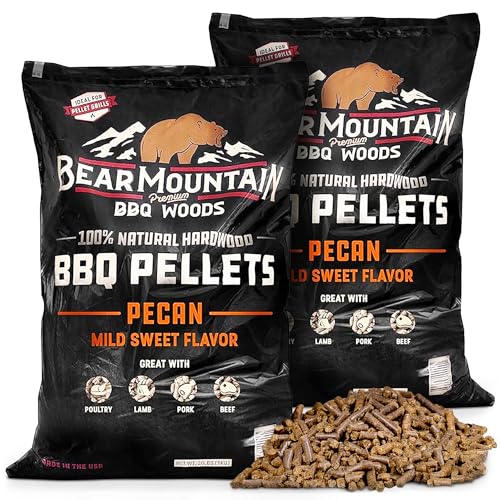
Hickory's gentler cousin — nutty and mildly sweet. The most underrated bag on this page.
- 100% pecan hardwood
- Two 20 lb bags
- Bear Mountain pairs it with poultry and vegetables
Good
- Mild sweet smoke with real depth
- Suits a wider range of food than hickory
Trade-off
- Less widely stocked than hickory or apple
Questions people actually ask
What are the best pellets for baby back ribs?
Cherry and hickory, blended roughly 50/50, or a maple-hickory-cherry competition blend that does the same job in one bag. Cherry supplies the color, hickory the depth.
Why are my ribs pale?
Usually the wood. Cherry produces a far deeper mahogany color on pork than hickory or apple. Add cherry to the hopper and the look changes noticeably.
How many pellets do ribs use?
Roughly 6 to 8 lb for a five-hour cook at 250°F.
Should I wrap ribs?
It is a texture choice rather than a smoke one — wrapping speeds the cook and softens the bark, and the meat stops taking on smoke once wrapped. If you wrap, make sure the first two to three hours do the flavor work.
Sources
Read next
Wood Pellets
The Best Wood Pellets for Pork
Pork takes fruitwood best — and the cut changes the answer.
Wood Pellets
Wood Pellet Flavors Explained
Every BBQ wood by smoke strength, and what each one suits.
Wood Pellets
The Best Wood Pellets for Brisket
Long cooks punish strong wood. The right bags for brisket.
Pellet Grills
The Best Pellet Smokers for Low and Slow
Ranked for smoking: big hoppers, low minimums, real capacity.