Wood Pellets
Hardwood vs Blended Pellets
Three different products get sold as the same thing. Here is what each label actually means and which brands tell you the truth.
By Mike M. · Last updated November 6, 2026 · How we pick
The three categories
A 100% single-wood pellet is only the named wood. A blend is a stated mixture of named hardwoods. A “flavored” pellet may be a cheap base wood with a small percentage of the named wood or an added flavoring. All three are sold on the same shelf with similar packaging.
| Type | What it is | How the listing reads | Example |
|---|---|---|---|
| 100% single wood | Only the named hardwood | '100% hickory', 'no flavorings, fillers, or additives' | Bear Mountain Hickory |
| Published blend | A stated mixture with the ratio given | '1/3 maple, 1/3 hickory, 1/3 cherry' | Lumber Jack Competition |
| Unpublished blend | A mixture with the proportions withheld | '100% natural hardwood blend' | Pit Boss Competition Blend |
| 'Flavored' | Often a base wood plus a small share of the named wood | Names a wood but does not say 100% of it | Varies by brand — read carefully |
| Charcoal blend | Hardwood plus actual charcoal pellets | 'hardwood pellets and 100% charcoal pellets' | Royal Oak Charcoal & Competition |
Is a blend worse than a single wood?
No — and this is the misconception worth clearing up. A blend is not a diluted single wood; it is a designed flavor. Maple-hickory-cherry blends exist because that combination suits more foods than any one of those woods alone: hickory for depth, cherry for color and sweetness, maple to soften.
Competition cooks blend deliberately. The reason to prefer a single wood is control, not quality — if you want to know exactly what the smoke is doing, a single wood lets you.
What actually matters more than the blend question
Bark
CookinPellets states no bark and no filler woods. Bark burns dirtier and adds a bitter note. A pellet made from debarked hardwood is a genuinely cleaner product, and that claim is more meaningful than whether the contents are one wood or three.
Binders and oils
Good pellets need no binder — the wood’s own lignin holds them together under pressure. Camp Chef states no oils, chemicals or binders added; Pit Boss states no added scents, sprays or glues. Look for that wording.
Moisture
Kiln-dried, low-moisture pellets burn hotter and cleaner, so the grill burns fewer to hold temperature. Camp Chef and Bear Mountain both state this explicitly.
How to read a pellet listing in ten seconds
- Does it say “100%” of a named wood, or give a ratio? If yes, you know what you are buying.
- Does it state no fillers, binders, oils or additives? If yes, good sign.
- Does it mention bark or kiln-drying? Bonus points for either.
- Does it say BBQ, cooking or smoking? If it says heating or stove, put it down.
- What is the bag weight? Divide the price by it before comparing anything.
A listing that names a wood but will not say “100%” and will not give a ratio is telling you something by omission.
Our recommendation
Buy a published blend as your everyday bag — Lumber Jack if you want the ratio stated, Pit Boss Competition if you want the lowest cost per pound — and one 100% single wood for when you want control. That covers everything without buying six bags.
Full rankings: best wood pellets for smoking. Flavor guidance: wood pellet flavors explained.
The picks in full
#1 · Cooks who want to know exactly what is burning
Lumber Jack Competition Blend
Lumber Jack
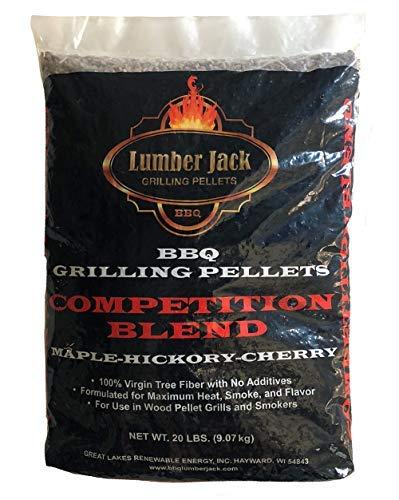
The only bag here that publishes its exact ratio: one third each maple, hickory and cherry.
- 1/3 maple, 1/3 hickory, 1/3 cherry — stated on the bag
- 20 lb bag
- Made in the USA
- Rated for pellet grills, tube smokers and the Smokin Wedgie
Good
- Published wood ratio, which almost no brand gives you
- Balanced flavor that suits most cuts
Trade-off
- 20 lb bag costs close to a Pit Boss 40 lb
#2 · Serious volume and purists
CookinPellets Hickory + Perfect Mix (2 x 40 lb)
CookinPellets
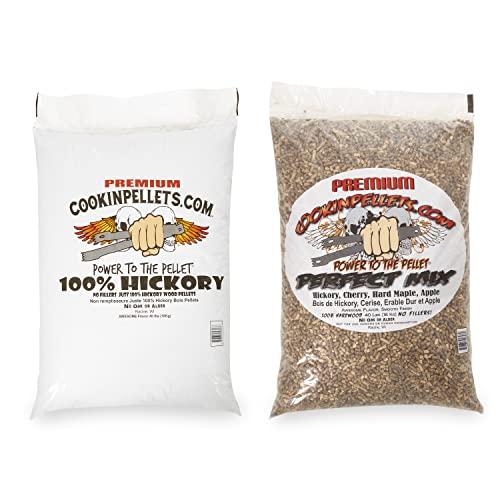
80 lb in one order with no bark and no filler wood. The enthusiast's bulk buy.
- Hickory, cherry, hard maple and apple
- Two 40 lb bags
- No bark, no filler woods, no additives
Price as of November 7, 2026. #ad how this is funded
Good
- No-filler policy is rare and genuinely affects flavor
- 80 lb lasts most households a season
Trade-off
- Highest up-front cost on this page
- Needs real dry storage space
#3 · Buying hickory in bulk without the 40 lb lift
Bear Mountain Hickory (2-pack)
Bear Mountain
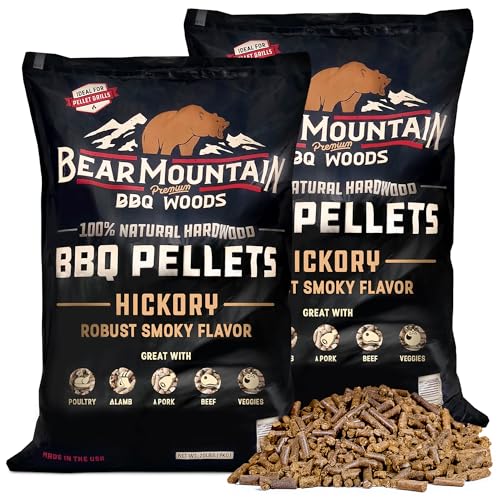
40 lb of pure hickory in two manageable bags instead of one back-breaking sack.
- 100% hickory hardwood
- Two 20 lb bags
- Bag measures 14 x 4 x 20 in
- Low moisture, low ash
Price as of November 7, 2026. #ad how this is funded
Good
- Two bags are easier to store and lift than one 40 lb
- Pure hickory, not a blend
Trade-off
- Costs more per pound than a Pit Boss 40 lb bag
#4 · One bag that does everything
Traeger Signature Blend
Traeger
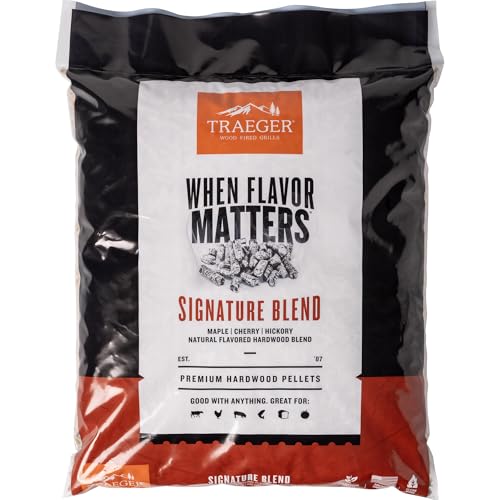
The safe default. Hickory, maple and cherry, so it suits almost anything you put on the grate.
- Hickory + maple + cherry blend
- 18 lb bag
- Made in USA, no binders, low ash
- Traeger pairs it with beef, poultry, pork, lamb, seafood, baked goods and vegetables
Price as of November 7, 2026. #ad how this is funded
Good
- Works with every cut
- Consistent pellet size
- Sold everywhere, so easy to re-buy
Trade-off
- 18 lb bag where Pit Boss and CookinPellets sell 40 lb
- Costs more per pound than most
#5 · Charcoal-flavor fans using a pellet grill
Royal Oak Charcoal & Competition Blend
Royal Oak
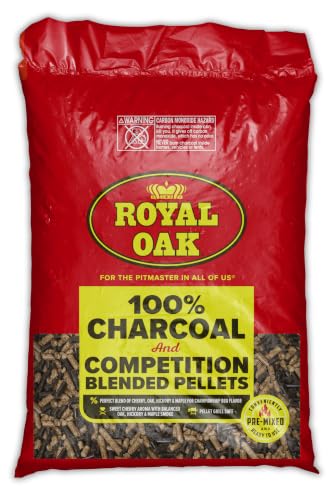
Blends actual charcoal pellets with hardwood — the closest a pellet grill gets to a charcoal flavor.
- Cherry, maple, hickory and oak hardwood plus 100% charcoal pellets
- Pre-mixed and ready to use
- Royal Oak lists it as safe in Traeger, Pit Boss, Camp Chef, Z Grills, Weber, Green Mountain, recteq and Louisiana grills
Price as of November 7, 2026. #ad how this is funded
Good
- Genuinely different flavor from any pure hardwood bag
- Good for searing as well as smoking
Trade-off
- Charcoal content means more ash than a pure hardwood pellet
- Not a low-and-slow specialist
Questions people actually ask
What is the best kind of wood pellets?
For everyday cooking, a published hardwood blend — maple, hickory and cherry style. For control over the flavor, a 100% single wood. Both are better bets than a “flavored” pellet that will not state what is actually in the bag.
Are blended pellets worse than 100% hardwood?
No. A blend is a designed flavor, not a diluted one — competition cooks blend deliberately. A single wood gives you more control, which is a different thing from being better.
What are pellets made of?
Compressed hardwood sawdust. Good BBQ pellets need no binder because the wood’s own lignin holds them together under pressure, which is why reputable brands state no glues, oils or additives.
Do charcoal pellets work in a pellet grill?
Blends of hardwood and charcoal pellets do, and Royal Oak lists theirs as safe in all major pellet grills. Expect more ash than pure hardwood, and they suit searing and shorter cooks better than long low-and-slow.
Sources
Read next
Wood Pellets
Wood Pellet Flavors Explained
Every BBQ wood by smoke strength, and what each one suits.
Wood Pellets
The Best Wood Pellets for Smoking
Eight BBQ pellet bags ranked on flavor, ash and cost per pound.
Wood Pellets
The Best Budget Wood Pellets
Cheapest pellets worth burning, ranked by cost per pound.
Guides
How to Store Wood Pellets
Why damp pellets jam augers, and how to prevent it.