Guides
What Happens If Your Pellet Grill Runs Out of Pellets?
The fire goes out, the chamber cools, and the controller may keep showing a plausible temperature for a while. Here is the recovery, step by step.
By Mike M. · Last updated November 6, 2026 · How we pick
What actually happens
The auger keeps turning but has nothing to feed, so the fire burns out. The chamber cools gradually rather than suddenly, and the controller will go on showing a falling temperature while the fire is already dead. Some grills alarm; many do not. You cannot simply refill and carry on — the burn pot has to be relit.
The recovery, in order
- 1
Check whether the fire is actually out
Look at the chimney. No smoke and a falling temperature means the fire is out. If the grill is still smoking and the temperature is merely low, you may have caught it in time — refill the hopper immediately and it may recover on its own.
- 2
Move the food somewhere warm
Wrap it in foil and put it in a kitchen oven at 225°F, or in a cooler wrapped in towels if it is nearly done. Do not leave meat sitting in a cooling chamber in the 40-140°F range for long — that is the window you want to move through quickly, not linger in.
- 3
Turn the grill off and clear the burn pot
Switch it off and let it cool enough to work on. The pot will have unburned pellets and ash in it. Clear them out — relighting a pot full of pellets is how you get a large flare-up when the igniter fires.
- 4
Refill the hopper and prime the auger
The auger tube may have emptied too, so the first ignition attempt could have no fuel. Run the prime function if your grill has one, or expect the start-up cycle to take longer than usual.
- 5
Restart and let it come back up
Run the normal start-up cycle and let the chamber reach temperature before the food goes back in. Then return the food and continue — you will have lost time, not the cook.
Is the food ruined?
Usually not, and the answer depends on how long it sat cooling.
The relevant food-safety guidance is about time spent between roughly 40°F and 140°F. A brisket that was at 165°F internal and cooled slowly in a closed chamber for forty minutes has not spent that time in the danger zone — it was above it. A chicken that had only just gone on and sat at 90°F for three hours is a different matter.
We are not a food-safety authority. If the food has been in the 40-140°F range for more than about two hours in total, the conventional guidance is to discard it, and we are not going to talk you out of that. When in doubt, the cost of a cut of meat is less than the cost of being wrong.
How to avoid it entirely
Know your hopper number before you start
| Hopper | Approximate hours | Safe for an unattended overnight? |
|---|---|---|
| 5 lb | ~4 | No |
| 8 lb | ~6 | No |
| 13.5 lb | ~11 | Tight |
| 18 lb | ~14 | Just about |
| 28-30 lb | ~22-24 | Yes |
| 50 lb | ~40 | Comfortably |
| 75 lb | ~50+ | Comfortably |
Cold and wind both push consumption up, so take 20% off those figures in winter. If your hopper number is less than your cook length plus a margin, plan a refill rather than hoping.
The three practical safeguards
- Top up before bed, not when it alarms. A hopper is not a fuel gauge — fill it to the top before any long unattended period.
- Keep a sealed container next to the grill. Topping up takes thirty seconds if the pellets are to hand and twenty minutes if they are in a shed. See pellet storage.
- Use a probe with an alarm. A pit-temperature alarm set below your target wakes you when the fire dies, which is the actual safeguard. See thermometers.
Traeger’s digital pellet sensor on the Woodridge Pro and above is the factory version of that third safeguard, and on an 18 lb hopper it is the most genuinely useful connected feature either major brand offers.
The picks in full
#1 · Anyone buying 40 lb bags
40 lb Pellet Storage Dispenser
Ben & Jane
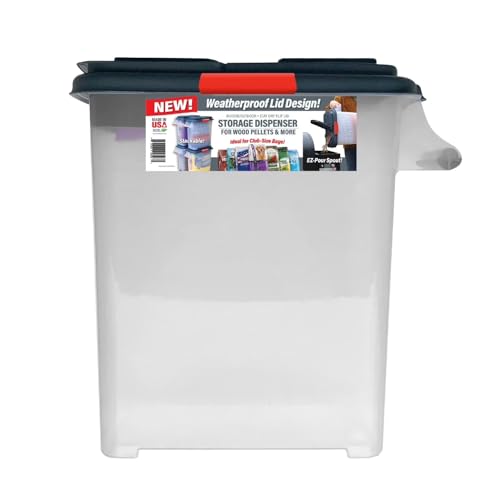
Takes a whole 40 lb bag and dispenses from the bottom, so the oldest pellets get used first.
- 40 lb capacity
- BPA-free, food safe
- Made in USA
- Bottom dispensing
Price as of November 7, 2026. #ad how this is funded
Good
- One container per bulk bag
- Bottom draw means stock rotates itself
Trade-off
- Takes real floor space
- Costs more than two simple bins
#2 · Monitoring several cuts at once on a budget
TempPro TempSync 1000ft Wireless
TempPro
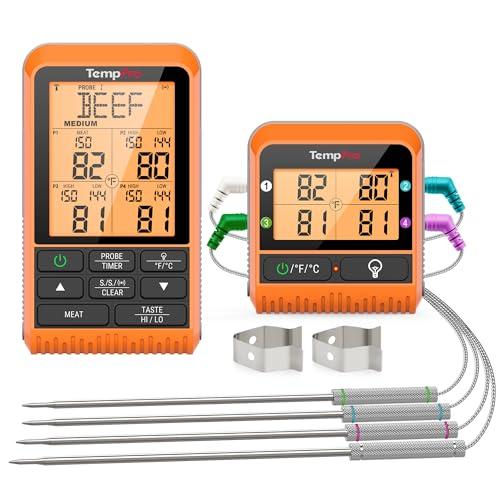
Four color-coded probes and 1,000ft of RF range for about a third of a Thermapen. The value pick.
- 4 color-coded probes
- 1,000ft RF range
- Alarms and a backlit display
$59.9917% off
Price as of November 7, 2026. #ad how this is funded
Good
- Four probes means a whole rack of ribs plus the pit temperature
- RF range beats Bluetooth across a house
Trade-off
- RF base station is another thing to keep charged
- Not as accurate as a Thermapen
#3 · Keeping an opened bag dry
Pellet Storage Bin with Lid (22 lb)
RCK Sales
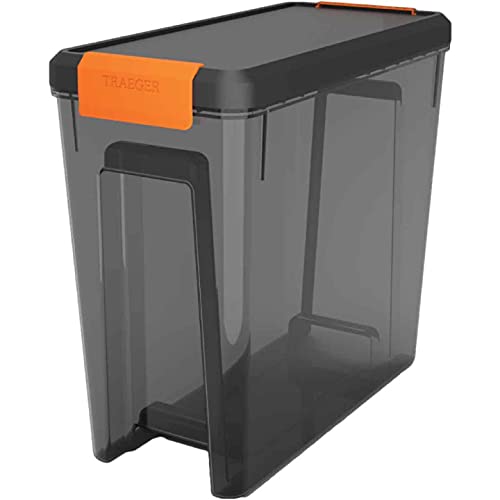
Pellets that absorb moisture crumble and jam augers. A sealed bin is the fix, and it is cheap.
- Holds 22 lb
- Plastic bin with lid
- Sized to the Traeger BAC615 pattern
Price as of November 7, 2026. #ad how this is funded
Good
- Holds a full 20 lb bag with the lid closed
- Stops the single most common cause of auger jams
Trade-off
- 22 lb means a second bin if you buy 40 lb bags
Questions people actually ask
What happens if my pellet grill runs out of pellets?
The fire goes out and the chamber cools gradually. You cannot just refill and continue — the burn pot has to be cleared of unburned pellets and relit, and the auger may need priming.
What should I do if my pellet grill runs out of pellets?
Move the food somewhere warm, turn the grill off, clear the burn pot, refill the hopper, prime the auger, restart, and put the food back once the chamber is back to temperature.
Is the food safe if the fire went out?
It depends on how long it spent between roughly 40°F and 140°F. Meat that was already above that range and cooled slowly for under an hour is generally fine; anything that sat in the danger zone for more than about two hours should be discarded. We are not a food-safety authority — when in doubt, discard.
How do I stop running out of pellets overnight?
Know your hopper’s run time (roughly 1.25 lb an hour at smoking temperatures), fill it to the top before bed, keep pellets next to the grill, and set a pit-temperature alarm on a probe so you are woken if the fire dies.
Sources
Read next
Guides
Common Pellet Grill Problems and Fixes
Nine problems and their real causes — mostly maintenance, not faults.
Pellet Grills
The Best Pellet Smokers for Low and Slow
Ranked for smoking: big hoppers, low minimums, real capacity.
Covers & Accessories
The Best Thermometers for Pellet Grills
Instant-read, leave-in and multi-probe compared — plus the WiFi dodge.
Guides
What Does a Pellet Grill Cost Per Cook?
The arithmetic nobody prints — and the one change that halves it.