Guides
How to Clean a Pellet Grill
Cleaning a pellet grill is not housekeeping — ash in the burn pot is what causes the temperature swings people blame on the controller.
By Mike M. · Last updated November 6, 2026 · How we pick
How to clean a pellet grill
Scrape the grates while warm after every cook. Empty the grease tray and bucket every two or three cooks. Vacuum the burn pot every three to five cooks with an ash vacuum, never a shop vac. Vacuum the whole barrel interior every 15-20 cooks. Empty and inspect the hopper at the end of a season.
The five-step routine
- 1
Scrape the grates — every cook, while warm
A bristle-free scraper is the right tool. Wire brushes shed strands that end up in food, and on porcelain-coated grates they also scratch the coating off. Do it while the grill is still warm and residue lifts easily; let it cool and it bakes on.
- 2
Empty the grease tray and bucket — every 2-3 cooks
Liners turn this into a lift-and-bin. Do it the same day after any high-fat cook (pork shoulder, brisket, bacon) — accumulated grease is a genuine fire risk, especially before a high-temperature cook. See grease liners.
- 3
Vacuum the burn pot — every 3-5 cooks
This is the step that matters most and the one people skip. The burn pot needs airflow from the fan to combust cleanly; ash restricts it, combustion gets unpredictable, and the temperature wanders. Let the grill go fully cold first, then clear the pot with an ash vacuum.
- 4
Vacuum the whole interior — every 15-20 cooks
Remove the grates and the heat deflector, lift out the grease tray, and vacuum everything: chamber floor, deflector plate, around the burn pot. Wipe the inside of the lid if carbon flakes are forming — those fall into food.
- 5
Empty and inspect the hopper — end of season
Use the hopper cleanout. Look for fines and dust at the bottom; those are what jam augers. Check the auger tube is clear. Then store the pellets in a sealed container rather than leaving them in an outdoor hopper over winter.
How often, in one table
| Task | Frequency | Tool | Why |
|---|---|---|---|
| Scrape grates | Every cook, warm | Bristle-free scraper | Residue bakes on when cold |
| Empty grease tray / bucket | Every 2-3 cooks | Liners | Fire risk; worst job if left |
| Vacuum burn pot | Every 3-5 cooks | Ash vacuum | Ash restricts airflow and causes temp swings |
| Vacuum interior | Every 15-20 cooks | Ash vacuum | Carbon flakes fall into food |
| Inspect hopper and auger | End of season | Scoop with sifter | Fines jam augers |
Never use a shop vac
Grill ash is fine enough to pass through a standard shop-vac filter and clog the motor, and a single live ember in a plastic canister full of dry ash is a real fire risk. Ash vacuums use metal canisters and fine-particulate filtration for exactly this reason. Let the grill go fully cold before vacuuming anything, whatever tool you use.
How to clean the inside of a pellet grill
The inside of the barrel accumulates two things: grease on the lower surfaces and a hard carbon layer on the lid.
The grease you vacuum and wipe. The carbon on the lid you mostly leave alone — a thin seasoned layer is normal and harmless. What you remove is anything flaking, because flakes fall onto food. A plastic scraper or a dry cloth is enough; do not take it back to bare metal and do not use oven cleaner inside a grill chamber.
What cleaning actually fixes
Three problems that look like faults and are usually maintenance:
- Temperature swinging up and down. Ash in the burn pot restricting airflow. See why is my pellet grill losing heat.
- Failing to ignite, or igniting roughly. Unburned pellets and ash in the pot from an interrupted cool-down cycle.
- A bitter or acrid taste. Old grease in the tray, or carbon flakes falling from the lid.
More in common pellet grill problems and fixes.
The grills that make this easier
Two design features materially reduce this work: Traeger’s EZ-Clean Grease & Ash Keg, which collects both into one removable container, and a removable burn pot — on the Pit Boss Advantage 850SL, for example.
Both turn a vacuum job into a lift-out. That is a real reason to weigh them in a purchase decision, because the maintenance you will actually keep up with is the maintenance that is easy.
The picks in full
#1 · Cleaning a pellet grill properly and safely
PowerSmith PAVC101 Ash Vacuum
PowerSmith
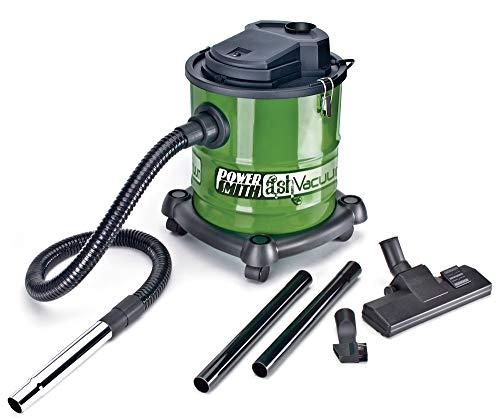
A purpose-built ash vacuum. Using a shop vac on grill ash is how shop vacs catch fire.
- 10 amp motor
- Canister ash vacuum
- Designed for fireplace and grill ash
Price as of November 7, 2026. #ad how this is funded
Good
- Rated for fine ash, which clogs and ignites in ordinary vacuums
- Turns a 20-minute clean into five
Trade-off
- Bulky to store
- Overkill if you only cook a few times a year
#2 · Cleaning porcelain-coated grates without scratching
Bristle-Free Grill Brush & Scraper
Generic
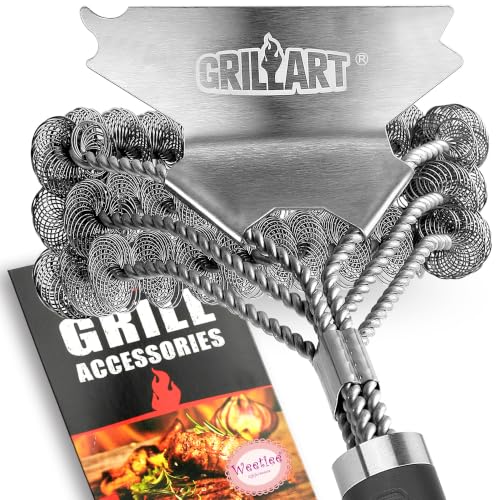
Bristle-free, so there are no wire strands to end up in the food. An 18-inch handle keeps your knuckles off the grate.
- 18 in handle
- Bristle-free stainless
- Wide scraper edge
Price as of November 7, 2026. #ad how this is funded
Good
- No loose wire bristles
- Safe on porcelain coatings
Trade-off
- Needs the grate warm to work well
#3 · Pit Boss owners who hate scraping
Pit Boss Grease Pan Liners (6-pack)
Pit Boss
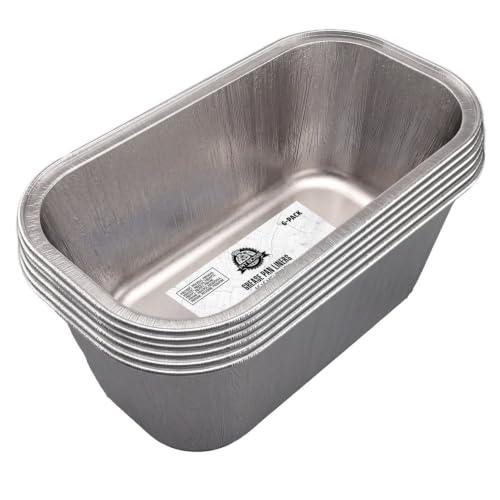
Single-digit dollars to never scrape a grease pan again. The highest-value accessory on this site.
- 6 liners per pack
- Pit Boss OEM, sized to their grease pans
Price as of November 7, 2026. #ad how this is funded
Good
- Cheapest meaningful upgrade you can make
- Cuts the worst job in pellet grilling to a lift-and-bin
Trade-off
- Consumable, so you re-buy them
- Sized for Pit Boss pans specifically
#4 · Any brand, if you measure your cup first
Aluminum Foil Grease Cup Liners (30-pack)
Rixordd
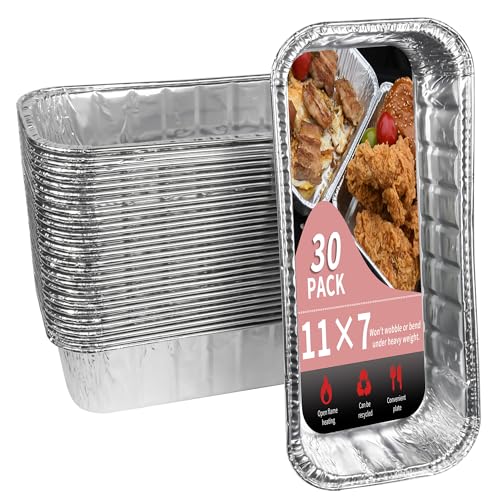
30 heavy-duty foil liners at 11.0 x 7.1 x 2.5 in — the generic answer that fits most grease cups.
- 30 per pack
- 11.0 x 7.1 x 2.5 in
- Heavy duty aluminum foil
Price as of November 7, 2026. #ad how this is funded
Good
- Lowest cost per liner here
- Dimensions published, so you can check the fit
Trade-off
- Not model-specific — measure before buying
Questions people actually ask
How often should I clean my pellet grill?
Scrape the grates every cook. Empty the grease tray every two or three. Vacuum the burn pot every three to five. Do a full interior vacuum every 15-20 cooks, and empty the hopper at season’s end.
How do I clean the inside of a pellet grill?
Remove the grates and heat deflector, lift out the grease tray, and vacuum the chamber with an ash vacuum. Leave the thin seasoned carbon layer on the lid; only remove anything that is flaking.
Can I use a shop vac on a pellet grill?
No. Fine ash clogs shop-vac filters and any live ember in a plastic canister is a fire risk. Use a purpose-built ash vacuum, and only on a fully cold grill.
How do I clean a Z Grills pellet grill?
The same routine as any pellet grill. Z Grills models have a hopper cleanout, which makes the end-of-season hopper empty straightforward, and a pellet viewing window so you can check for fines without opening it.
Will cleaning fix my temperature swings?
Very often, yes. Ash in the burn pot restricts the airflow the fire needs, which makes combustion unpredictable. It is the first thing to check before blaming the controller.
Sources
Read next
Covers & Accessories
The Best Ash Vacuum for a Pellet Grill
Why a shop vac is the wrong — and risky — tool for grill ash.
Guides
Common Pellet Grill Problems and Fixes
Nine problems and their real causes — mostly maintenance, not faults.
Guides
Why Is My Pellet Grill Losing Heat?
Six causes in diagnostic order. The first explains most cases.
Covers & Accessories
Grease Liners and Drip Trays
Cheapest accessory here, and a real safety item too.