Wood Pellets
The Best Wood Pellets for Beef
Beef is the only meat that can take mesquite — and only on short cooks. Cook length decides the wood more than the meat does.
By Mike M. · Last updated November 6, 2026 · How we pick
Cook length decides the wood
Beef is robust enough for the strongest woods, but only on short cooks. Mesquite on a steak is excellent; mesquite on a twelve-hour brisket turns bitter. Hickory and oak work across the whole range, which is why they are the default beef woods.
| Cut | Cook time | Best woods | Mesquite? |
|---|---|---|---|
| Steak (reverse sear) | 30-60 min | Mesquite, hickory, charcoal blend | Yes — ideal |
| Burgers | 20-30 min | Hickory, mesquite, charcoal blend | Yes |
| Beef short ribs | 6-8 hours | Hickory, oak, pecan | Sparingly, blended |
| Tri-tip | 1-2 hours | Oak (the Santa Maria tradition), hickory | Yes, blended |
| Brisket | 10-14 hours | Oak, hickory, competition blend | No |
| Chuck roast | 6-8 hours | Hickory, oak | Sparingly |
| Beef jerky | 4-6 hours at low temp | Hickory, mesquite | Yes |
Mesquite, used properly
Bear Mountain describes mesquite as producing a bold, robust smoke suited to beef, brisket, ribs and hearty cuts — and on short cooks it is the most distinctive wood you can burn. A mesquite-smoked steak tastes unmistakably of the Southwest.
The rule is time. Under about two hours, mesquite is a feature. Over about six hours it becomes acrid. For anything in between, blend it into oak at perhaps a quarter of the hopper.
A smoke tube is the neatest way to use it: oak or hickory in the hopper, mesquite in the tube for the first hour only.
The charcoal blend option for steak
Royal Oak’s blend of hardwood plus actual charcoal pellets is genuinely interesting for beef, because charcoal flavor is what most people are chasing on a steak. It produces more ash than pure hardwood and suits short, hot cooks rather than long low ones — which is exactly the beef use case.
Oak and the Santa Maria tradition
Central California tri-tip is traditionally cooked over red oak, and oak remains the classic Texas brisket wood. Bear Mountain describes it as adding a smooth smoky flavor. It is the most under-rated beef wood because it is unexciting in isolation — and that is precisely what makes it reliable over a long cook.
Oak is also the best base for blending, because it dilutes a strong wood without muddying it. See wood pellet flavors explained.
The picks in full
#1 · Buying hickory in bulk without the 40 lb lift
Bear Mountain Hickory (2-pack)
Bear Mountain
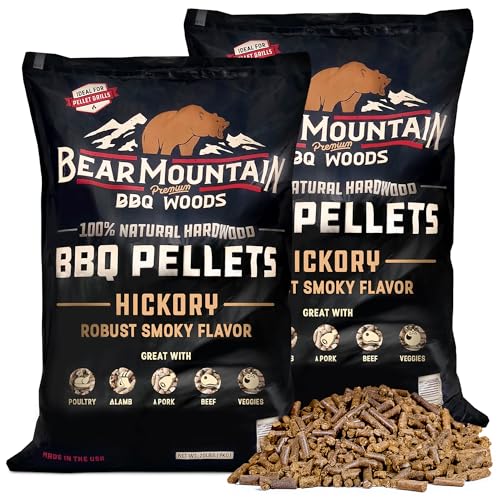
40 lb of pure hickory in two manageable bags instead of one back-breaking sack.
- 100% hickory hardwood
- Two 20 lb bags
- Bag measures 14 x 4 x 20 in
- Low moisture, low ash
Price as of November 7, 2026. #ad how this is funded
Good
- Two bags are easier to store and lift than one 40 lb
- Pure hickory, not a blend
Trade-off
- Costs more per pound than a Pit Boss 40 lb bag
#2 · Beef, brisket and hearty cuts
Bear Mountain Mesquite (2-pack)
Bear Mountain
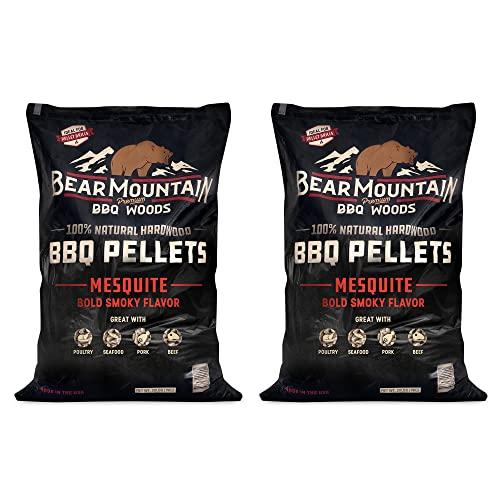
The strongest smoke on this page. Use it on beef, in short cooks, and sparingly.
- 100% mesquite hardwood sawdust, no fillers or binders
- Two 20 lb bags
- Bear Mountain describes the profile as bold and robust
Price as of November 7, 2026. #ad how this is funded
Good
- Unmistakable Texas-style smoke
- Great in a smoke tube for a flavor boost
Trade-off
- Turns bitter on long cooks
- Wrong wood for poultry, fish or anything delicate
#3 · A base wood to blend with fruitwoods
Bear Mountain Oak (2-pack)
Bear Mountain
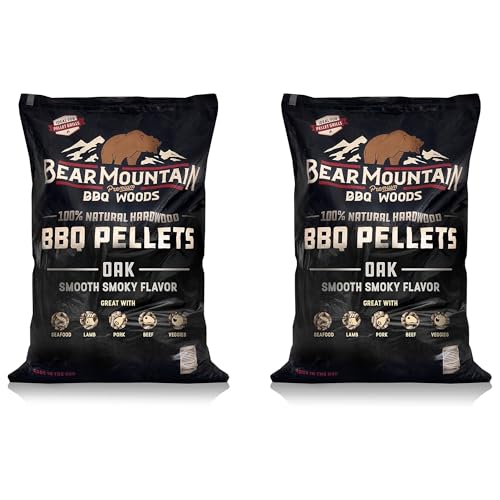
The neutral workhorse. Smooth smoke that never fights the food — the best base for blending your own.
- 100% oak hardwood
- Two 20 lb bags
- Low moisture for consistent smoke
- Works in all pellet grills
Good
- Smooth and mild, hard to overdo
- Ideal to stretch an expensive fruitwood
Trade-off
- On its own the flavor is unremarkable
#4 · Charcoal-flavor fans using a pellet grill
Royal Oak Charcoal & Competition Blend
Royal Oak
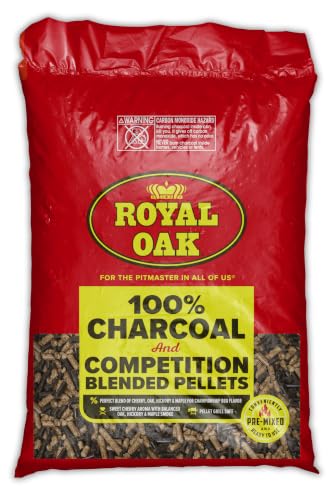
Blends actual charcoal pellets with hardwood — the closest a pellet grill gets to a charcoal flavor.
- Cherry, maple, hickory and oak hardwood plus 100% charcoal pellets
- Pre-mixed and ready to use
- Royal Oak lists it as safe in Traeger, Pit Boss, Camp Chef, Z Grills, Weber, Green Mountain, recteq and Louisiana grills
Price as of November 7, 2026. #ad how this is funded
Good
- Genuinely different flavor from any pure hardwood bag
- Good for searing as well as smoking
Trade-off
- Charcoal content means more ash than a pure hardwood pellet
- Not a low-and-slow specialist
#5 · Cooks who want to know exactly what is burning
Lumber Jack Competition Blend
Lumber Jack
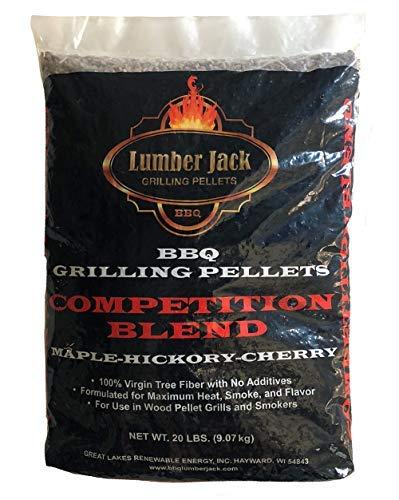
The only bag here that publishes its exact ratio: one third each maple, hickory and cherry.
- 1/3 maple, 1/3 hickory, 1/3 cherry — stated on the bag
- 20 lb bag
- Made in the USA
- Rated for pellet grills, tube smokers and the Smokin Wedgie
Good
- Published wood ratio, which almost no brand gives you
- Balanced flavor that suits most cuts
Trade-off
- 20 lb bag costs close to a Pit Boss 40 lb
Questions people actually ask
What are the best pellets for beef?
Hickory and oak across every cut. Mesquite on short cooks like steak, burgers and jerky. A charcoal-hardwood blend is worth trying specifically for steak.
Can you use mesquite on beef?
Yes, and it is the one meat that suits it — but only on cooks under about two hours. Over six hours it turns bitter, which is why it is wrong for brisket.
What wood is traditional for brisket?
Oak in Central Texas, often post oak specifically. Hickory is the other classic. Both are medium woods that hold up across a twelve-hour cook.
What pellets for steak?
Mesquite, hickory or a charcoal blend, because the cook is short and you want the smoke to register fast. Reverse sear and the wood does its work during the low phase.
Sources
Read next
Wood Pellets
The Best Wood Pellets for Brisket
Long cooks punish strong wood. The right bags for brisket.
Wood Pellets
Wood Pellet Flavors Explained
Every BBQ wood by smoke strength, and what each one suits.
Guides
Can You Sear on a Pellet Grill?
Yes — with caveats. Plus the free technique that mostly fixes it.
Pellet Grills
The Best Pellet Grills for Searing
The grills that really sear — and the cheap fix for the ones that don't.